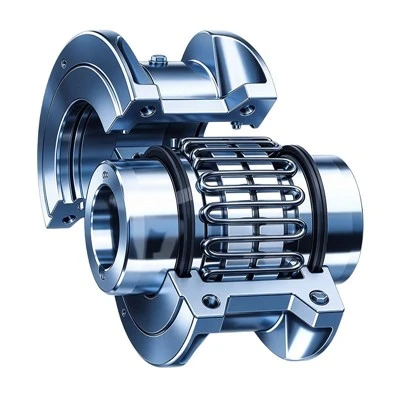
The anti-reverse mechanism of a backstop operates on the principle of one-way locking: It permits the drive system to rotate only in a preset direction and automatically locks when there is a tendency for reverse rotation. The operating principles for common backstop types (such as sprag/wedge-type and roller-type) are as follows:
Structural Components: These primarily include an outer race (connected to the gearbox output shaft or the driven component of the equipment), an inner race (connected to the motor or driving component), sprags or wedges (evenly distributed within the wedge-shaped space between the inner and outer races), and springs (which push the sprags to maintain contact with both races).
Normal Operation (Forward Rotation): When the system rotates in the preset direction, the inner race drives the sprags to rotate along with it. Because the relative motion between the inner and outer races places the sprags in a "disengaged" state (creating a clearance between the sprags and the races), the sprags slide freely with the inner race; the backstop does not engage, thus not interfering with the equipment's normal operation.
Reverse Rotation (Tendency to Back-drive): When the equipment tends to reverse direction, the relative motion between the inner and outer races changes. At this point, driven by spring force and friction, the sprags become "wedged" into the space between the inner and outer races-the counter-rotation of the races causes the sprags to wedge tighter, creating a rigid lock that prevents relative reverse rotation and thereby stops the equipment from back-driving.