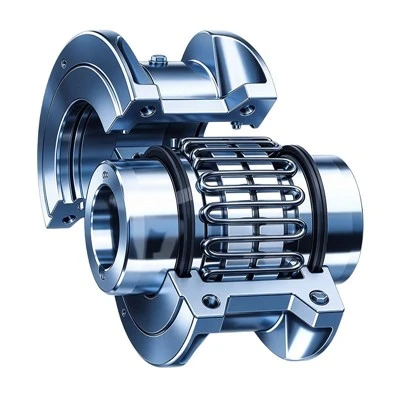
Quality inspection and adherence to standards are crucial for ensuring the reliable operation and professional manufacturing of jaw-type flexible couplings.
The scope of third-party inspection encompasses acceptance testing for new products, periodic inspections of couplings in service, and failure analysis of defective components. Core inspection items are categorized into static and dynamic performance: static performance testing includes geometric dimension checks, hardness testing, and static torsional rigidity tests; dynamic performance testing covers dynamic torque transmission capacity, fatigue life, temperature rise, and vibration acceleration spectrum analysis. Common inspection methods include coordinate measuring machine (CMM) inspection, spectroscopic analysis, torque loading tests, laser alignment checks, and accelerated aging tests. Instrumentation includes high-frequency dynamic torque sensors, multi-channel vibration analysis systems, and computer-controlled electro-hydraulic servo fatigue testing machines.
my country began standardization work for jaw-type flexible couplings in the 1980s (particularly the mid-1980s). For instance, the first national standard for these couplings, GB/T 5272-1985, was issued in 1985. This initiative established a comprehensive standards system comprising fundamental standards-covering terminology, nominal torque series, and shaft bore/connection types and dimensions-as well as various product-specific standards.