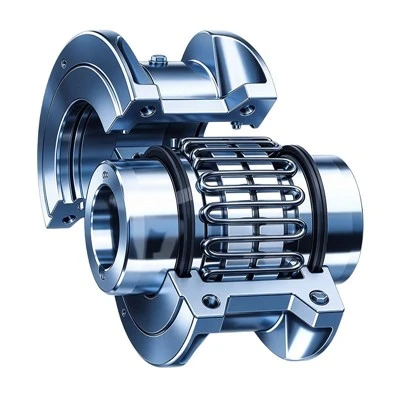
A professional manufacturer of rigid couplings explains the correct disassembly procedure: before dismantling the coupling, mark the relative positions of its components to serve as a reference for reassembly. For couplings used in high-speed machinery, the connecting bolts are weight-matched; therefore, markings must be clear and accurate to avoid errors. Disassembly typically begins with removing the connecting bolts. However, the accumulation of grease, corrosion products, and other deposits on the threads can make removal difficult-particularly with severely rusted bolts.
Selecting the right tools is essential for removing connecting bolts; using the wrong tools can damage the bolt heads (stripping the external or internal hex surfaces), making removal significantly harder. For bolts that are rusted or heavily coated with grease, a solvent (such as a penetrating oil or rust-loosening agent) is often sprayed onto the bolt-nut interface. Allowing the solvent to penetrate the threads facilitates the disassembly of the rigid coupling.