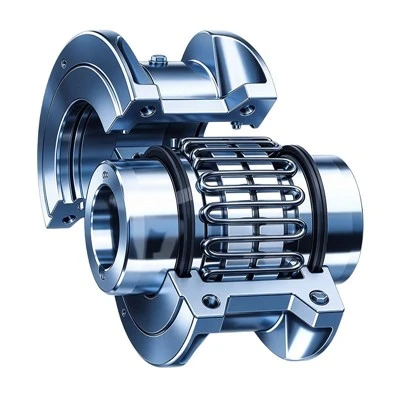
A shaft drive system typically connects driving and driven shafts using one or more diaphragm couplings to transmit rotation or motion. These couplings primarily connect the shafts of electric motors, gear reducers, and driven machinery; the configuration, connection type, and dimensions of the shaft bores are determined by the specifications of the connected shafts. Product designs generally adhere to international standards for cylindrical and conical shaft ends.
Regarding the structural and series design of various metal diaphragm couplings, the bore size range (maximum and minimum diameters) and bore length for each specification are determined based on torque transmission requirements, the coupling's structure, and hub strength; notably, each specification corresponds to only one specific bore length. In contrast, international standards for diaphragm couplings consistently specify a single bore length for each size. However, due to the misleading influence of the GB/T 3852 standard, Chinese product standards for diaphragm couplings often list multiple bore lengths for a single specification-varying according to the bore diameter-and these multiple lengths are frequently included when adopting international standards, under the mistaken impression that such inclusion is necessary for a complete adoption.